Sunday, 28 September 2014

All Entries For Obesity

Is the Junk-Food 'Addiction' Study Junk Science?


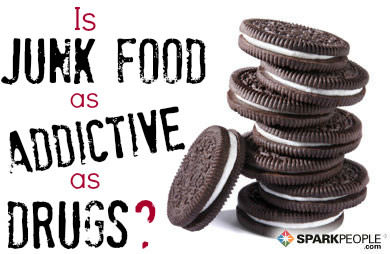
"I'm fat because of Oreo cookies!" screamed the woman as she entered the weight-loss class I was coaching last week. In hand, she waved the press release from Connecticut College, which blared the warning, "Oreos are just as addictive as drugs!" 
 
 "I am addicted to certain foods, just like those rats were addicted to Oreo cookies," she continued on.  "It's supposed to be worse than being addicted to cocaine. How am I ever going to be successful with my weight loss?"

Should Obesity Be Classified as a Disease?


Yesterday, at their annual meeting, the American Medical Association decided to classify obesity as a disease. They hope this change will help doctors to better treat the complex condition and aid in the fight against type 2 diabetes and heart disease. While The New York Times reports that the AMA's decision has no legal authority, some medical professionals think the outcome will result in sweeping changes. 

8 Reasons Why You're Not Losing Weight


Sometimes, people can diet and work out and track their calories and do everything right—but still not lose weight. I can't begin to tell you how often members, friends and even acquaintances ask me why they're not losing weight despite doing X, Y or Z. It's one of the most common questions I get as a trainer. Sometimes, the answer isn't that easy to come by.
 
But usually, when someone seems to be doing the right things but not making progress, a list of possible problems runs through my head. These are the most common scenarios I tend to see that stop people from getting results—and they could be the culprits for your weight woes, too.

http://www.sparkpeople.com/blog/blog_topics.asp?topic=obesity

Friday, 26 September 2014

9 Foods to Help You Lose Weight

Delicious foods that help you diet? It sounds too good to be true.

No doubt: Weight loss comes down to simple math. You have to eat fewer calories than you burn.
"Certain foods can help you shed body weight," says Heather Mangieri, RD, a spokeswoman for the Academy of Nutrition and Dietetics, "because they help you feel full longer and help curb cravings."
Some even kick up your metabolism. So take this list when you go to the supermarket:
1. Beans
Inexpensive, filling, and versatile, beans are a great source of protein. Beans are also high in fiber and slow to digest. That means you feel full longer, which may stop you from eating more.

2. Soup

Start a meal with a cup of soup, and you may end up eating less. It doesn’t matter if the soup is chunky or pureed, as long as it's broth-based. You want to keep the soup to 100 to 150 calories a serving. So skip the dollops of cream and butter.

3. Dark Chocolate

Want to enjoy chocolate between meals? Pick a square or two of dark over the milky version. In one study, chocolate lovers who were given dark chocolate ate 15% less pizza a few hours later than those who had eaten milk chocolate.

4. Pureed Vegetables

You can add more veggies to your diet, enjoy your "cheat" foods, and cut back on the calories you’re eating, all at the same time. When Penn State researchers added pureed cauliflower and zucchini to mac and cheese, people seemed to like the dish just as much. But they ate 200 to 350 fewer calories. Those healthy vegetables added low-cal bulk to the tasty dish.

5. Eggs and Sausage

A protein-rich breakfast may help you resist snack attacks throughout the day. 
In a study of a group of obese young women, those who started the day with 35 grams of protein -- that’s probably way more than you’re eating -- felt fuller right away. The women ate a 350-calorie breakfast that included eggs and a beef sausage patty. The effect of the high-protein breakfast seemed to last into the evening, when the women munched less on fatty, sugary goods than the women who had cereal for breakfast.

6. Nuts

For a great snack on the run, take a small handful of almonds, peanuts, walnuts, or pecans. Research shows that when people munch on nuts, they automatically eat less at later meals. 

7. Apples

Skip the apple juice and the applesauce and opt instead for a crunchy apple. Whole fruit blunts appetite in a way that fruit juices and sauces don’t. 
One reason is that raw fruit has more fiber. Plus, chewing sends signals to your brain that you’ve eaten something substantial.

Wednesday, 24 September 2014

Weight Loss Addiction Can Destroy Your Life

Weight Loss Addiction

Weight Loss Addiction
A preoccupation with body image can signal a weight loss addiction. Photo Credit loss weight image by gajatz from Fotolia.com
There is a vast difference between the desire to shed a few pounds and an intense addiction and obsession with losing weight. Fixation on weight loss can lead to psychological disturbances that manifest as eating disorders, which can lead to hospitalization, and in extreme cases may result in death.

Anorexia Nervosa

Anorexia nervosa, often referred to as anorexia, is an eating disorder medically defined as the refusal to maintain a body weight that is within 15 percent of an individual’s normal body weight. Anorexia is classified into two subgroups -- restricting or binge-eating/purging. The disorder is classified by the behaviors that are present. 

The restricting type of anorexia involves severely limiting food intake in an effort to maintain an extremely low body weight. Restricting type anorexics often engage in excessive amounts of exercise as well. The binge-eating/purging subtype of anorexia involves severe food restriction as well as self-induced vomiting or purging behaviors, such as laxative abuse, use of diuretics and enemas.

Anorectic Symptoms

Clinical features of anorexia include distorted body image, intense and irrational fear of gaining weight, preoccupation with food, abnormal eating habits and denial of illness. Over time, anorexia also causes a variety of physical symptoms including brittle hair and nails, yellow skin, dry mouth, increased sensitivity to cold, loss of muscle and body fat, confusion and depression. When body weight drops significantly, anorexia often leads to amenorrhea, which is the absence of at least three consecutive menstrual periods.
Bulimia nervosa is an addiction to weight loss characterized by repeated episodes of binging and purging. Someone with bulimia usually eats vast amounts of food in one sitting and then induces vomiting to rid her body of calories. This type of bulimia is called purging bulimia. With non-purging bulimia, attempts to rid the body of calories may involve excessive exercise, laxative abuse and use of diuretics.

Bulimic Symptoms

Bulimic behaviors include eating to the point of feeling pain, a sense of loss of control, self-induced vomiting after eating, excessive exercise, preoccupation with body image and distorted body image. The physical symptoms of bulimia include erosion of teeth and gums, abnormal bowel function, swollen glands, sore throat, sores on the hands, dehydration, irregular heartbeat, depression, anxiety and changes in menstruation.

Considerations

Both types of eating disorders are classified as mental illnesses. Treatment for these weight loss addictions is often long-term and involves psychotherapy. People who refuse to cease self-destructive weight loss addiction may be hospitalized.

Friday, 19 September 2014

Weight Loss Is Permanent, Will You Take The Journey?

Permanent Weight Loss: The Journey


You are what you are seeking. Your soul has been waiting patiently for you to find her. Turn your gaze inward and you will find her.
As a weight loss coach and emotional eating expert, my clients are mostly women who are compulsive, emotional overeaters, food addicts, and binge eaters. These people have struggled with food and weight for a long time. They have tried many different diets and weight loss approaches, and all have failed.
They often view their weight problem as the main barrier to their happiness and success in life. They are certain that once they lose the weight their real lives will begin, and the story of their lives will have a happy ending, with either prince charming arriving on his white horse, and or all their problems magically disappearing.
The weight is not the problem, it is only a symptom. The larger issue is one of separation: a separation of the mind, body, and spirit. Food and weight obsessions are a calling to wholeness and spiritual unity.
Your weight problem is the way your spiritual uneasiness is manifesting itself in the world. When you’re obsessed with food and weight you are focused on a surface issue, and on your surface (ego) self. To truly put an end to the problem, you must dive into the deepest depths of your Being, into the heart of the sacred mystery that is you.
You are not who you think you are. You are not just a mother, wife, husband, girlfriend, worker bee, or overweight man or woman. First and foremost, you are spiritual being yearning to express your deepest, most divine Self in the world. You are a co-creator with the divine power of the universe. The secret to permanent weight loss is to remember and recover who you really are.
Your real job on this planet is to give expression to this Sacred Self. It is only when you start to express and live from this Self, that life begins to change in the most amazing ways. Healing requires taking the disowned and discarded parts of yourself, and tenderly patching them into the loving quilt of self-acceptance. It is by embracing your fragile humanness that you discover your greatest strengths.
Self-forgiveness is the healing balm that paves the way to self-acceptance. Once you have recovered your authentic Self, you are able to reclaim your divine gifts and bring these into the world. This is what it means to become the hero or heroine of your own life.
And you thought you just needed to lose some weight!
You are the most fascinating creature on the planet. If only you could believe that! There is an entire universe inside of you just waiting for you to discover it. You're convinced that an expert, a book, a new weight loss diet, a workout, or a new romance is the answer to your weight problem. You come to me looking for answers, yet the answers are locked away inside of you, just waiting for you to take the keys and unlock their secrets!
My advice is always to take your attention and put it on yourself. Turn your gaze inward to find your authentic self. She is patiently waiting for you to find her. Gaze within yourself with the eyes of a curious lover. Increase your openness and trust. Surrender to the greater mystery of you.
Your deeper self will reveal to you all that you need to know. I cannot tell you what your highest good is. No one but you, can penetrate the mystery of you. I can only act as a humble guide and point you in the direction of the keys.
What are the keys to unlocking this great mystery? The keys are willingness, surrender, faith, courage, curiosity, openness, and inquiry.
You must begin to ask the questions. Who am I really? What am I beneath my surface (ego) self? Are the stories and the beliefs I hold about myself really true? What am I afraid of? What is this obsession with food and weight really about? What am I avoiding by focusing on food and weight? What is my true purpose and mission in life? How does my soul want to express itself in this lifetime?
Until you begin to ask yourself the questions you will not receive the answers. As it is said in the bible, "Ask and you will receive, knock and the door will be opened."
You must ask. Many of you are afraid to look within because you're either afraid of what you'll find or you think there will be nothing there! This is simply not true.
Where will you find your Higher Self? Beneath the reverberant chatter of your mind, lies the ground of your Being. The heart of this Being is pure love. Your spirit is love itself! All that you are seeking is contained within you. As it is said in the bible, "The kingdom of heaven is within you."
Your ego self is an illusion. It is the veil of unreality. Underneath the persona of the small self that you identify as you, lies a much deeper reality. It is a vastness of Self that contains the Universe.
Your authentic self is the pot of gold at the end of the rainbow. Your self-seeking in the world of outer illusion will never bring you what you seek. It creates a hunger that can never be satisfied through external things because the source of your hunger is your Sacred Self that is calling out for nourishment and expression. Your job is to find her, and listen to her secret wisdom and guidance. Only she knows how to quench your deepest hunger and longings.
How do you find her? She exists in the silence. She speaks in whispers. You must get still to hear her speak. She will answer you in prayer, yoga, meditation, art or in nature. She can be found wherever stillness exists. Her clues are everywhere.
Her only requirement is awareness, the awareness of a deeper reality and oneness that is at the core of all creation. She can be found in the fullness of the moment; she exists at the center of your every breath.
When you begin to express your deeper, most essential Self, life will take on a joyous, magical quality unlike anything your egoic self could ever imagine. You will no longer sleep walk through life in a trance of self-delusion. You will begin to feel truly alive and vibrant. The whole world will open up to you because you are at one with it and your star will be shining ever so brightly!
There is nothing more radiant and attractive in the world than a person who is lit from within. When the divine spark roars into a spiritual bonfire, it draws and warms others like a moth to a flame.
Your real life can only begin when you act from this deeper Self, this core at the heart of your being. The great love affair of your life is the one you have with yourself. That is why the greatest secret and tool of the weight loss master is self-love.
My wish for you is that you fall madly, deeply in love with yourself. There is such joy in this journey! It's also true that you may find some pain, but beneath this pain lies true freedom. The path of liberation is through the facing of pain. The Buddha taught that pain and suffering are a part of life. All addictions and compulsions serve as a way of avoiding the pain and unpleasantness of life.
This path requires courage. If you are willing to stay the course, you will find it. I promise you that. This freedom offers an unbounded joy that cannot be attained by strivings in the external world. Joy is your natural default button. It is your sacred birthright.
Amazing things happen when you begin to align with your Self and connect to your higher purpose in the world. You will find much support. You are never alone on this journey. The universe has a way of supporting you and giving you what you need. People and opportunities will begin to show up everywhere. Synchronicities and miracles begin to happen as you live from a state of flow connected to your spiritual power source.
You will know you have reached this place when feelings of peace, harmony, and contentment are with you most of the time. Weight and food will no longer be an issue. You will be joyfully engaged in the dance of life. When you are fully alive with the fierce radiance of an open heart, you will know that you have come home to yourself. You will be filled with a sense of wonder for the sacred mystery that is alive in the very heart of you.
May you awaken to the joy and wonder of you!

Thursday, 11 September 2014

Weight Loss and Breast Milk

Breast milk reveals a correlation between dietary fats and academic success

The amount of omega-3 docosahexaenoic acid (DHA) in a mother’s milk — fats found primarily in certain fish, nuts and seeds — is the strongest predictor of test performance. It outweighs national income and the number of dollars spent per pupil in schools, researchers say.]
You are what you eat, the saying goes, and now a study conducted by researchers at UC Santa Barbara and the University of Pittsburgh suggests that the oft-repeated adage applies not just to physical health but to brain power as well.
In a paper published in the early online edition of the journal Prostaglandins, Leukotrienes and Essential Fatty Acids, the researchers compared the fatty acid profiles of breast milk from women in over two dozen countries with how well children from those same countries performed on academic tests.
Their findings show that the amount of omega-3 docosahexaenoic acid (DHA) in a mother's milk -- fats found primarily in certain fish, nuts and seeds -- is the strongest predictor of test performance. It outweighs national income and the number of dollars spent per pupil in schools.
DHA alone accounted for about 20 percent of the differences in test scores among countries, the researchers found.
On the other hand, the amount of omega-6 fat in mother's milk -- fats that come from vegetable oils such as corn and soybean -- predict lower test scores. When the amount of DHA and linoleic acid (LA) -- the most common omega-6 fat -- were considered together, they explained nearly half of the differences in test scores. In countries where mother's diets contain more omega-6, the beneficial effects of DHA seem to be reduced.
"Human intelligence has a physical basis in the huge size of our brains -- some seven times larger than would be expected for a mammal with our body size," said Steven Gaulin, UCSB professor of anthropology and co-author of the paper. "Since there is never a free lunch, those big brains need lots of extra building materials -- most importantly, they need omega-3 fatty acids, especially DHA. Omega-6 fats, however, undermine the effects of DHA and seem to be bad for brains."
Both kinds of omega fat must be obtained through diet. But because diets vary from place to place, for their study Gaulin and his co-author, William D. Lassek, M.D., a professor at the University of Pittsburgh's Graduate School of Public Health and a retired assistant surgeon general, estimated the DHA and LA content -- the good fat and the bad fat -- in diets in 50 countries by examining published studies of the fatty acid profiles of women's breast milk.
The profiles are a useful measure for two reasons, according to Gaulin. First, because various kinds of fats interfere with one another in the body, breast milk DHA shows how much of this brain-essential fat survives competition with omega-6. Second, children receive their brain-building fats from their mothers. Breast milk profiles indicate the amount of DHA children in each region receive in the womb, through breastfeeding, and from the local diet available to their mothers and to them after they are weaned.
The academic test results came from the Programme for International Student Assessment (PISA), which administers standardized tests in 58 nations. Gaulin and Lassek averaged the three PISA tests -- math, science and reading ability -- as their measure of cognitive performance. There were 28 countries for which the researchers found information about both breast milk and test scores.
"Looking at those 28 countries, the DHA content of breast milk was the single best predictor of math test performance," Gaulin said. The second best indicator was the amount of omega-6, and its effect is opposite. "Considering the benefits of omega-3 and the detriment of omega-6, we can get pretty darn close to explaining half the difference in scores between countries," he added. When DHA and LA are considered together, he added, they are twice as effective at predicting test scores as either is alone, Gaulin said.
Gaulin and Lassek considered two economic factors as well: per capita gross domestic product (a measure of average wealth in each nation) and per student expenditures on education. "Each of these factors helps explain some of the differences between nations in test scores, but the fatty acid profile of the average mother's milk in a given country is a better predictor of the average cognitive performance in that country than is either of the conventional socioeconomic measures people use," said Gaulin.
From their analysis, the researchers conclude that both economic wellbeing and diet make a difference in cognitive test performance, and children are best off when they have both factors in their favor. "But if you had to choose one, you should choose the better diet rather than the better economy," Gaulin said.
The current research follows a study published in 2008 that showed that the children of women who had larger amounts of gluteofemoral fat "depots" performed better on academic tests than those of mothers with less. "At that time we weren't trying to identify the dietary cause," explained Gaulin. "We found that this depot that has been evolutionarily elaborated in women is important to building a good brain. We were content at that time to show that as a way of understanding why the female body is as evolutionarily distinctive as it is."
Now the researchers are looking at diet as the key to brain-building fat, since mothers need to acquire these fats in the first place.
Their results are particularly interesting in 21st-century North America, Gaulin noted, because our current agribusiness-based diets provide very low levels of DHA -- among the lowest in the world. Thanks to two heavily government-subsidized crops -- corn and soybeans -- the average U.S. diet is heavy in the bad omega-6 fatty acids and far too light on the good omega-3s, Gaulin said.
"Back in the 1960s, in the middle of the cardiovascular disease epidemic, people got the idea that saturated fats were bad and polyunsaturated fats were good," he explained. "That's one reason margarine became so popular. But the polyunsaturated fats that were increased were the ones with omega-6, not omega-3. So our message is that not only is it advisable to increase omega 3 intake, it's highly advisable to decrease omega-6 -- the very fats that in the 1960s and '70s we were told we should be eating more of."
Gaulin added that mayonnaise is, in general, the most omega-6-laden food in the average person's refrigerator. "If you have too much of one -- omega-6 -- and too little of the other -- omega 3 -- you're going to end up paying a price cognitively," he said.
The issue is a huge concern for women, Gaulin noted, because "that's where kids' brains come from. But it's important for men as well because they have to take care of the brains their moms gave them.
"Just like a racecar burns up some of its motor oil with every lap, your brain burns up omega-3 and you need to replenish it every day," he said.

Sunday, 7 September 2014

Food Addiction, New Study!

Food addiction can be reversed, new study suggests
Boston researchers switched study participants to a lower-calorie diet and also gave them classes on healthy eating. They learned to crave better foods over time.


You may be able to condition your brain to crave healthy foods.


You may be able to train your brain to want the side salad instead of the french fries.
A new study from the Jean Mayer USDA Human Nutrition Research Center on Aging at Tufts University and at Massachusetts General Hospital revealed that a low-calorie, high-fiber diet combined with behavioral counseling can actually up one's cravings for healthy foods and minimize those of unhealthy ones.
It's the first study to suggest the addictive powers of junk food — which trigger the same reward centers in the brain as drugs like cocaine do — can be reversed, and that humans can be trained to want nutritious foods.
We learn to crave simple carbs and sugary foods over time, said senior and co-corresponding author Susan B. Roberts.
"We don't start out in life loving french fries and hating, for example, whole wheat pasta," Roberts, the director of the Energy Metabolism Laboratory at the USDA HNRCA, and a professor at the Friedman School of Nutrition Science and Policy at Tufts University and adjunct professor of psychiatry at Tufts University School of Medicine, said in a release. "This conditioning happens over time in response to eating — repeatedly! — what is out there in the toxic food environment."
Like any other addiction, once the habit is established, it can be tough to break.
Roberts and her team studied 13 overweight and obese men and women for the study. Eight of them were participants in a weight-loss program Tufts researchers had recently designed; five were in a control group and not enrolled.
The eight participants in the weight-loss program ate things like sweet potatoes and high-fiber cereal instead of french fries and sugary cereals. They also took classes that taught them to diminish the worth of caloric foods and instead prefer healthier foods with ample protein and fiber.
After six months, MRI scans of the participants' reward centers in the brain showed changes in the areas associated with learning and addiction. Their scans indicated that they had an increased sensitivity to — and more enjoyment of — healthier foods, and a reduced sensitivity to unhealthy ones.
But we're not out of the woods just yet. The study was small — additional research must be done to confirm these results and on other factors that contribute to diet choices.
"There is much more research to be done here, involving many more participants, long-term follow-up and investigating more areas of the brain," Roberts said. 

Anxiety And Weight Loss


Why Does Anxiety Cause Weight Loss?


Why Does Anxiety Cause Weight Loss?
Stress can have serious physical consequences, including sudden weight loss.Photo Credit Exhausted young woman image by Olga Sapegina fromFotolia.com

It's easy to underestimate the effects of stress and dismiss anxiety as a normal part of life. The list of common anxiety symptoms includes both weight gain and weight loss, depending on how a specific individual responds to stress. Since many people struggle with trying to lose weight, it may seem this anxiety symptom is a positive thing, but unhealthy weight loss is not something to take lightly.

Loss of Appetite

Although many people respond to stress by eating high-calorie comfort foods, loss of appetite is also on the list of anxiety symptoms. Anxiety can trigger mild depression, which can cause people to lose interest in eating, according to AnxietyCentre.com. It can also cause a loss of taste sensation, making foods less palatable and enjoyable. People can become so concerned with their source of anxiety they forget to eat. If this persists, the nutritional imbalance can increase anxiety symptoms and lead to more serious symptoms.

Burning More Calories

One of the common effects of stress is restlessness, which can cause people to pace or fidget. The extra calories burned can contribute to weight loss. In addition, exercise is a common remedy for stress. Whether it's a walk outside to get your mind off of things or a tough workout regimen in the gym, the extra physical activity contributes to weight loss. Although this is generally healthy weight loss, excessive exercise can also be harmful.
Smokers typically light up more often when they feel the effects of stress. Cigarettes make them feel calmer, but nicotine speeds up their metabolism and acts as an appetite suppressant. This is why smokers typically gain weight when they quit smoking. Other people may drink more coffee or tea when stressed. Although it may seem counterintuitive to increase caffeine intake when feeling anxiety, these beverages may serve the role of comfort food. Caffeine is another appetite suppressant.

Anti-Anxiety Medications

A group of anti-anxiety drugs called selective serotonin reuptake inhibitors, or SSRIs, can contribute to weight loss by causing nausea and suppressing appetite, notes the Mayo Clinic. Patients starting on these drugs may find themselves eating less in the first few days of taking the medications. Over time, the nausea should fade, and normal appetite should return.

When to See a Doctor

Unexpected weight loss can be symptomatic of a number of serious medical conditions. If you are eating the same as when you were unstressed and not exercising any more than before but still losing weight, talk to your physician. If you are experiencing any other symptoms, such as intolerance to temperature or a swelling in your neck, you should be checked for hyperthyroidism, advises Medline Plus. If any of your anxiety symptoms are overwhelming to the point you find it hard to function or if you lose more than 5 percent of your body weight in a six- to 12-month period, contact a health care provider.

Friday, 5 September 2014

Weight Loss Statistics

A record two in three women have dieted in past year, while 44% of men were among the 29 million Britons trying to slim

 
     Some 29 million British people attempted to lose weight last year
        Only 8% of dieters follow a 'trend' such as Dukan or Atkins
        The 5:2 is the most popular dieting trend, with 39% of slimmers using it
        Only 5% of women never worry about their weight, and just 17% of men  

     A record-breaking two out of three women tried to lose weight in the past year – and more men than ever are trying to slim down, figures have shown. This means that last year a total of 29 million Britons decided to exercise or diet to ward off problems associated with weight gain. The proportion of women who tried to shed some weight went up last year from 63 per cent to an all-time high of 65 per cent.

The vast majority of women worry about their weight

More than half (55 per cent) of Brits having tried to lose weight in the past year

And the percentage of men who attempted to cut down the size of their paunch rose from 42 to 44 per cent in 2013, according to an annual survey by retail analyst Mintel.

The figures come after Hunger Games star Jennifer Lawrence spoke out against the pressure on women to look thin, calling on Hollywood to drop its obsession with unrealistically skinny body images.


    Official statistics show 61 per cent of the UK population are still overweight. Of these, more than 13million are clinically obese – with the cost of NHS treatment for associated health problems such as heart disease and diabetes running to billions of pounds every year.

    Encouragingly, the survey showed that exercise seemed to be more popular with slimmers than faddy diets, with around 60 per cent of people choosing to get a bit more active when they wanted to manage their weight. 

    However many of the 29million who tried to lose weight last year used a combination of exercise and healthy eating. Just under half said they tried to cut back on fatty foods and 48 per cent limited themselves to smaller portions and consumed less sugar.

    In 2013, 2.32million took up fashionable diet crazes – with around a million trying the 5:2 regime, which involves reducing calorie intake on two days a week.

    The programme’s part-time approach led to it coming out on top of the list of the year’s popular diets. The regime is particularly effective at reducing belly fat and lowering the cholesterol levels associated with blocked arteries.

    Coming in second place was the low carbohydrate Atkins diet – and 25 per cent of dieters opted for high protein and low fat weight loss regimes such as the Dukan diet.


    flab

    But while millions see the New Year as a good time to try and get healthy, with a host of celebrity weight loss DVDs cashing in on the trend, the figures revealed that many slimmers’ efforts are doomed to failure. 

    Mintel found that out of everyone who tried dieting last year, one in five said their good intentions had soon fallen by the wayside thanks to a lack of willpower.

    More than a third found it hard to count calories when dining out and around one in ten said their lives were so busy that it was too hard to stick to a diet.

    Despite struggling to eat healthily, many people said they still viewed food aimed specifically at dieters with suspicion. Diet food sales dipped by 1 per cent in 2012 and then went on to increase by a marginal 2 per cent in 2013. The survey found most people didn’t trust the products’ ingredients, such as artificial sweeteners.

    They also tended to resent the small portion sizes and questioned whether any of the meals were actually lower in calories than standard products.

    Mintel’s senior food analyst Emma Clifford said: ‘Sales of diet meals are struggling, which is at odds with the huge consumer interest in losing weight, framed by rising levels of obesity.

    ‘There is a myriad of other routes towards weight loss that consumers prefer over buying “light” or “diet” food, with exercising more being the most popular. Furthermore, the market is hampered by negative perceptions in terms of healthiness and portion sizes.’